Maine Flying Beetles With Babies Under Wings Inside House
Bugs in the Water

Many of the insects you run across get-go their life in water. The young phase of these insects is usually called a larvae or nymph. Somewhen the ones who are going to, leave the water and the skeleton they used in that location. They have different ways of coming to country - some swim to the surface of the water and shed their old skeleton there while others crawl out onto a stone or piece of grass. If you are walking next to a river or stream you can often meet these onetime skeletons on the edge. Regardless of how they do it, this time of irresolute skeletons is very vulnerable because they cannot practise much to protect themselves, similar fly abroad. One of the reasons is they have to wait for their wings to be ready for the chore.
 Simply in one case the wings are ready they tin can wing like crazy! And what a beautiful sight it tin be to see these footling critters come out of the water hundreds at a time. These mass migrations from the h2o to the air are often chosen "hatches."
(click on department titles in brown to aggrandize or contract them)
Many of the insects you come across showtime their life in h2o. The young phase of these insects is usually chosen a larvae or nymph. Eventually the ones who are going to, go out the h2o and the skeleton they used at that place. They have different ways of coming to land - some swim to the surface of the water and shed their old skeleton there while others crawl out onto a stone or piece of grass. If you are walking adjacent to a river or stream you can often see these quondam skeletons on the edge. Regardless of how they do it, this time of changing skeletons is very vulnerable because they cannot do much to protect themselves, like wing away. One of the reasons is they have to wait for their wings to exist ready for the job.
Merely once the wings are set up they can fly like crazy! And what a beautiful sight it can exist to see these little critters come out of the water hundreds at a fourth dimension. These mass migrations from the water to the air are oftentimes called "hatches."
(click on section titles in chocolate-brown to expand or contract them)
Stoneflies
Society - Plecoptera
IN THE WATER
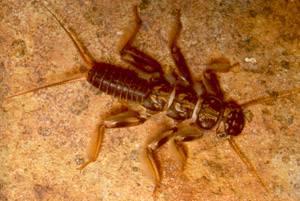
 WHAT DO THEY LOOK Similar?
- They are always very apartment
- Filament-like gills present most their legs
- They e'er have 2 tail parts
WHERE IN THE Water DO THEY LIVE?
- Underneath rocks in fast flowing water.
WHAT Practise THEY Swallow?
- Almost eat algae and bacteria or leaves that they shred
- Some eat other insects
WHO EATS THEM?
- Fish, Frogs, Birds, Other insects
HOW LONG Practice THEY Alive?
- Between 1 and 3 years - molting between x and thirty times
 HOW Make clean DOES THEIR WATER NEED TO BE?
Demand VERY clean water and are used to evaluate water pollution and stream health. When there is not a lot of oxygen in the water, many species volition do what looks similar a push-up to increase the flow of water by their gills and help them breathe.

LEAVING THE WATER (EMERGING)
- Without exception, they emerge by crawling out of the h2o onto rocks, sticks, or other shoreline objects.
- In some species the adult emerges from the nymph within inches of the water.
- Others crawl up to ten feet back into the wood.
This keeps stoneflies safe from being eaten past trout at a phase when mayflies and caddisflies are the nearly vulnerable.


ON THE LAND
 WHAT DO THEY LOOK Similar?
- Wings are folded flat over the back
- They have 2 tail parts
WHAT DO THEY EAT?
- Algae or lichens
WHO EATS THEM?
- Birds, Other insects
HOW LONG Do THEY LIVE?
- Between 1 and 4 weeks
αmáhkehis - Mayflies
Society - Ephemeroptera
IN THE WATER
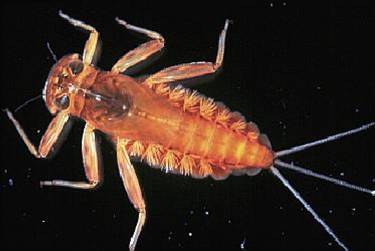
 WHAT Exercise THEY Look LIKE?
- They are ordinarily quite flat
- Their colour usually blends in with their habitat
WHERE IN THE H2o Do THEY LIVE?
- Most are apartment considering they live on rocks or the stream bottom in fast flowing water.
- Others burrow into the bottom of the stream, live in the vegetation or are active swimmers
WHAT DO THEY Swallow?
- Most eat algae and bacteria
- Others filter stuff out of the water, scrape vegetation off the rocks or swallow other insects
WHO EATS THEM?
- Fish, Frogs, Birds, Other insects
HOW LONG DO THEY Live?
- Equally little every bit iv weeks and as long as iv years
HOW Make clean DOES THEIR H2o NEED TO Exist?
- Nearly demand VERY clean water. Are used to evaluate water pollution/stream wellness.
LEAVING THE Water (EMERGING)
- They bladder to the surface, their back splits open and wings come up out. This is a VERY vulnerable time.
- In one case stiff enough, they fly to shelter.
- They molt once more so that their legs and tail tin grow longer. They are the just insect that do this!

In some species almost the entire population volition sally at one time - this is usually chosen a hatch. Hatches are a great time for faux with wing fishing.

 ON THE Country
WHAT Exercise THEY Expect LIKE?
- They concur their wings together loftier above their back
- They almost always have 3 tail parts
WHAT DO THEY EAT?
- The adults do non eat - they only reproduce
WHO EATS THEM?
- Fish, Frogs, Birds, Other insects
HOW LONG DO THEY LIVE?
- As niggling as two hours and every bit long as 14 days
asihkhalάsəsso - Caddisflies
Order - Tricoptera
 IN THE H2o
WHAT Practise THEY LOOK LIKE?
- Similar to worms with legs on 1 cease
WHERE IN THE Water Do THEY Live?
- Most live in cases they build out of sand, rock, twigs, or leaf pieces held together with the silk they produce.
- Some of those who are free-living spin nets to catch food
- Some replace their case as they abound, others renovate the old ane, some comport the case around, others stick them to an object.
- One group of big caddisflies are predators


WHAT Practice THEY EAT?
- Nearly annihilation (plants, leaner, other insects) in many different ways (shredding, scraping or filtering)
WHO EATS THEM?
- Fish, other insects
- Easier to catch because they migrate a lot
HOW LONG DO THEY LIVE?
- Betwixt 2 weeks and 1 year
HOW Make clean DOES THEIR Water Demand TO BE?
- Some species need very make clean water
- Others can tolerate much higher levels of pollution
 LEAVING THE WATER (EMERGING)
- Most rise to the surface and struggle through - unremarkably taking flight apace once they're out of the h2o, just slow species can drift long distances one-half submerged.
- Others crawl out onto rocks or sticks.
- Some ascension to the surface and swim apace across it to shore.
- All accept mandibles to chew their way out of their cocoon and emerge.

O Due north THE Country
WHAT DO THEY Look Like?
- Wings are held tent-similar over the belly
WHAT Do THEY EAT?
- If they consume it is only liquids
WHO EATS THEM?
- Fish, Frogs, Birds, Other insects
HOW LONG Exercise THEY LIVE?
- Between a few days and a few months
ačəssahtəkʷe - Dragon and Damselflies
Order - Odonata
For more information on the dragonflies and damselflies in Maine click here.

 DRAGONFLIES
IN THE WATER
WHAT DO THEY LOOK LIKE?
- Sturdy bodies with wing pads
WHERE IN THE WATER DO THEY Alive?
- Slow moving or all the same water.
- They crawl around or swim by intaking water through their mouths and propelling it out their posteriors similar a tiny jet
WHAT Exercise THEY EAT?
- Other insects - they are extremely skillful predators
WHO EATS THEM?
- Fish
HOW LONG Do THEY Live?
- Less than i year and up to 4 years
- Molting betwixt 8 and 15 times
 HOW CLEAN DOES THEIR H2o NEED TO Be?
- Generally need clean water
- Tin tolerate lower water quality than some other insects
LEAVING THE WATER (EMERGING)
- They crawl out of the h2o
- Their back splits open and they begin to push themselves out of their quondam skeleton
- They fill up up their wings and abdomen with fluid
- They get rid of the excess fluid and fly away


ON THE LAND
 WHAT DO THEY Expect Like?
- Afterwards landing wings are held out to the sides
WHAT DO THEY EAT?
- Big numbers of insects
WHO EATS THEM?
- Birds
HOW LONG DO THEY LIVE?
- A few weeks to a few months
~~~~~~~~~~~~~~~~~~~~~~~~~~~~~~~~~~~~~~~~~~~~~~~~~~~~~~~~~~~~~~~~~~~~~~~~~~~~~~~~~~~~~
DAMSELFLIES
 IN THE Water
WHAT DO THEY LOOK Similar?
- Slender bodies with wing pads
WHERE IN THE WATER DO THEY Alive?
- Slow moving or still water.
- They swim past awkwardly wiggling.
WHAT DO THEY Consume?
- Other insects - they are fierce predators
WHO EATS THEM?
- Fish
HOW LONG Practice THEY LIVE?
- Less than ane year and up to 4 years
- Molting between eight and 15 times
HOW CLEAN DOES THEIR Water NEED TO Be?
- Mostly demand clean h2o
- Tin can tolerate lower h2o quality than some other insects
 LEAVING THE WATER (EMERGING)
- They crawl out of the water
- Their back splits open and they begin to push themselves out of their old skeleton
- They fill their wings and belly with fluid
- They get rid of the backlog fluid and wing away

 ON THE State
WHAT DO THEY Wait LIKE?
- After landing wings are held folded together above the dorsum
WHAT DO THEY EAT?
- Big numbers of insects
WHO EATS THEM?
- Birds
HOW LONG DO THEY Live?
- A few weeks to a few months
carpenterbeind1967.blogspot.com
Source: https://www.penobscotnation.org/departments/natural-resources/water-resources/bugs-in-the-water
0 Response to "Maine Flying Beetles With Babies Under Wings Inside House"
Postar um comentário